Honeycomb Board Stage Sets and Props for Theatre and Live Events
A set wall that two stagehands can lift in one hand each, a column that does not wobble and a prop that goes into paper recycling after closing night.
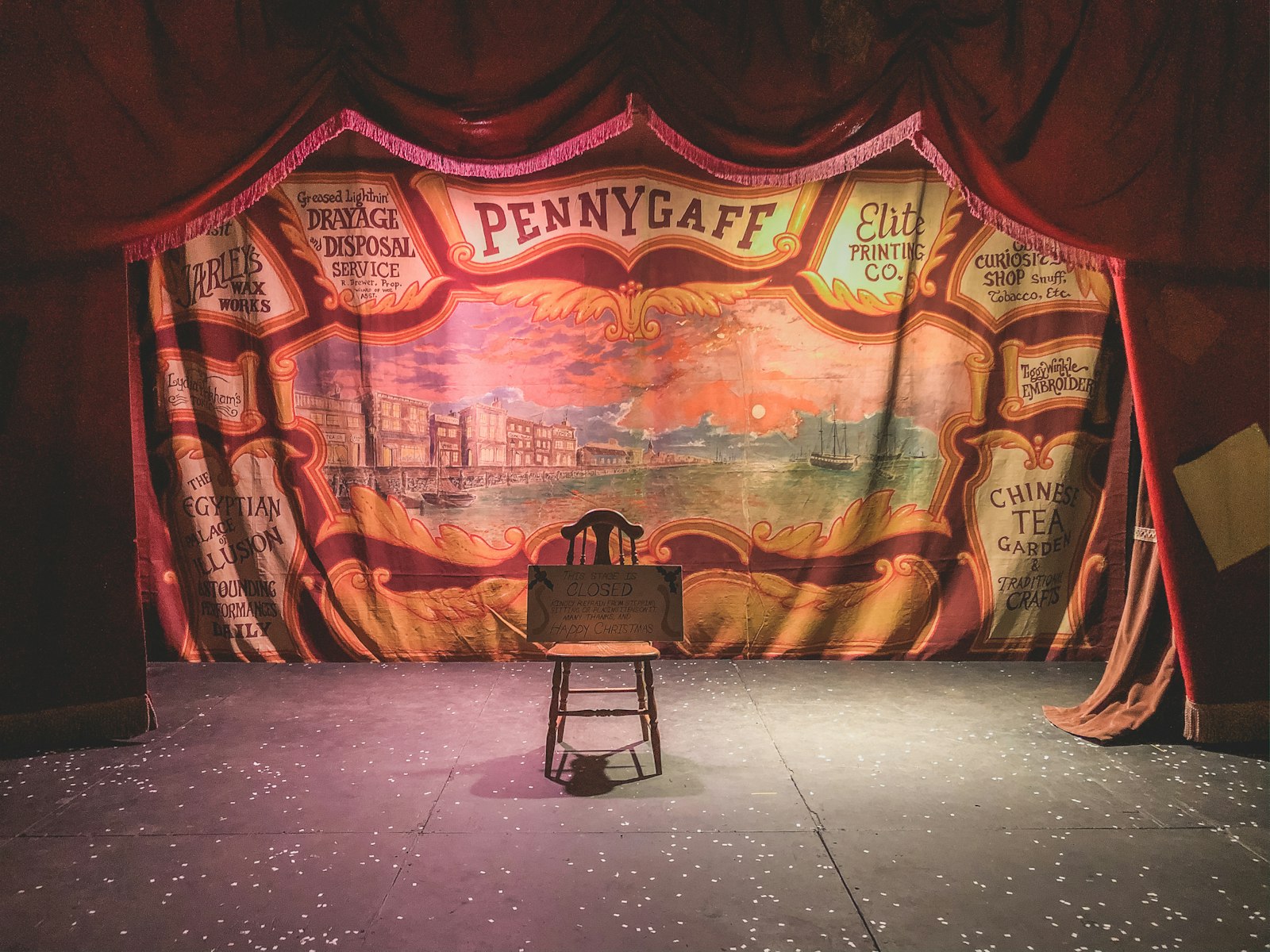
Honeycomb board is used for stage sets and props because it is rigid enough for tall flats, columns and arches, light enough for stagehands to move quickly during a scene change, easy to cut, carve and paint in a scenic workshop, and recyclable as paper when the production closes. Set builders use it for theatre, school and community productions, concerts, corporate stages and touring shows where every kilogram has to be loaded and unloaded.
This article covers which scenic pieces suit honeycomb, how to build and finish them, what changes against timber flats and plywood, and the limits that matter on a stage, including fire safety. It applies to standard kraft honeycomb board of the kind phb manufactures in Balakong, Selangor, Malaysia.
Which stage sets and props suit honeycomb board
Flat scenery is the obvious use: set walls, facades, window and door frames, ground rows and profile cut-outs of trees, buildings or skylines. Sheets up to 2.4m x 1.2m give a full-height flat from one panel, and 10–20mm board keeps it light. Three-dimensional pieces follow: columns and arches built as boxes or curved from scored board, oversized props, signage, lecterns and plinths for corporate stages.
Thicker board, 30–50mm, is used where a piece has to stand on its own without much bracing, or where it is carved and layered into relief, such as stone walls, cornices and sculpted props.
Building and finishing honeycomb scenery
Cut with a sharp knife, a panel saw or a CNC router; join with slots, glue, kraft tape or timber battens along the back of large flats where they need extra stiffness or fixings. Brace flats with rear jacks and weights as you would any scenery. The kraft face takes scenic paint well once primed; a thin first coat protects the paper from heavy wet coats. For a printed look, laminate a printed sheet to the face before cutting.
As an illustrative example, a school drama club building a street scene might cut four house facades from 16mm sheets, paint them in the art room, and fix a single batten along the back of each so it can be braced and moved by two pupils during scene changes.
What changes against timber flats and plywood
Scene changes are faster because pieces are lighter, and fewer people are needed to strike and load the set. Touring gets easier: panels stack flat and weigh a fraction of plywood equivalents. Building takes lighter tools and less workshop space. At the end of the run, painted honeycomb that will not be reused goes into paper recycling as mono-material kraft paper, instead of a skip of painted timber and plywood.
Per sheet, honeycomb costs more than foam board and less than plywood or MDF at similar rigidity. Per production, once labour, transport, storage and disposal are counted, it is usually the lower-cost option for scenery that is not walked on.
Where honeycomb is the wrong choice on stage
Paper is combustible. Check the venue fire rules before you build: many venues require scenery to be flame-retardant treated or certified, and untreated honeycomb may not be accepted. Keep it away from pyrotechnics, open flame and hot lamps. Anything performers stand, sit, climb or dance on, such as platforms, stairs and rostra, needs an engineered timber or steel structure. Standard honeycomb is not waterproof, so rain effects, water on stage and open-air stages need another material or a sealed, laminated build.
Frequently asked questions
Can honeycomb board be used for theatre sets?
Yes, for scenery that is not walked on: set walls, facades, profile cut-outs, columns, arches and large props. It is rigid, light for scene changes, cuts with knives, saws or a CNC router and takes scenic paint once primed. Check the venue fire rules first, since many venues require flame-retardant treated scenery.
Is honeycomb board fire resistant for stage use?
Standard honeycomb board is paper and is combustible, so it should not be described as fire resistant. Many venues require scenery to be flame-retardant treated or certified. Ask the venue what it accepts before you build, keep honeycomb away from pyrotechnics, open flame and hot lamps, and choose a treated material where the rules require it.
Where can set builders in Malaysia buy honeycomb board?
phb manufactures honeycomb board in Balakong, Selangor, and supplies sheets from 10mm to 50mm thick in sizes up to 2.4m x 1.2m to set builders, schools and prop makers. Ask for a sample kit to test cutting and painting, or send your set list by WhatsApp on +6016-891 6381 for a quote on the sheets.
Build your next set lighter
Send us the set list or drawings, the venue and how the show moves. We will suggest thicknesses for each piece and send a sample kit for your scenic workshop to test.